

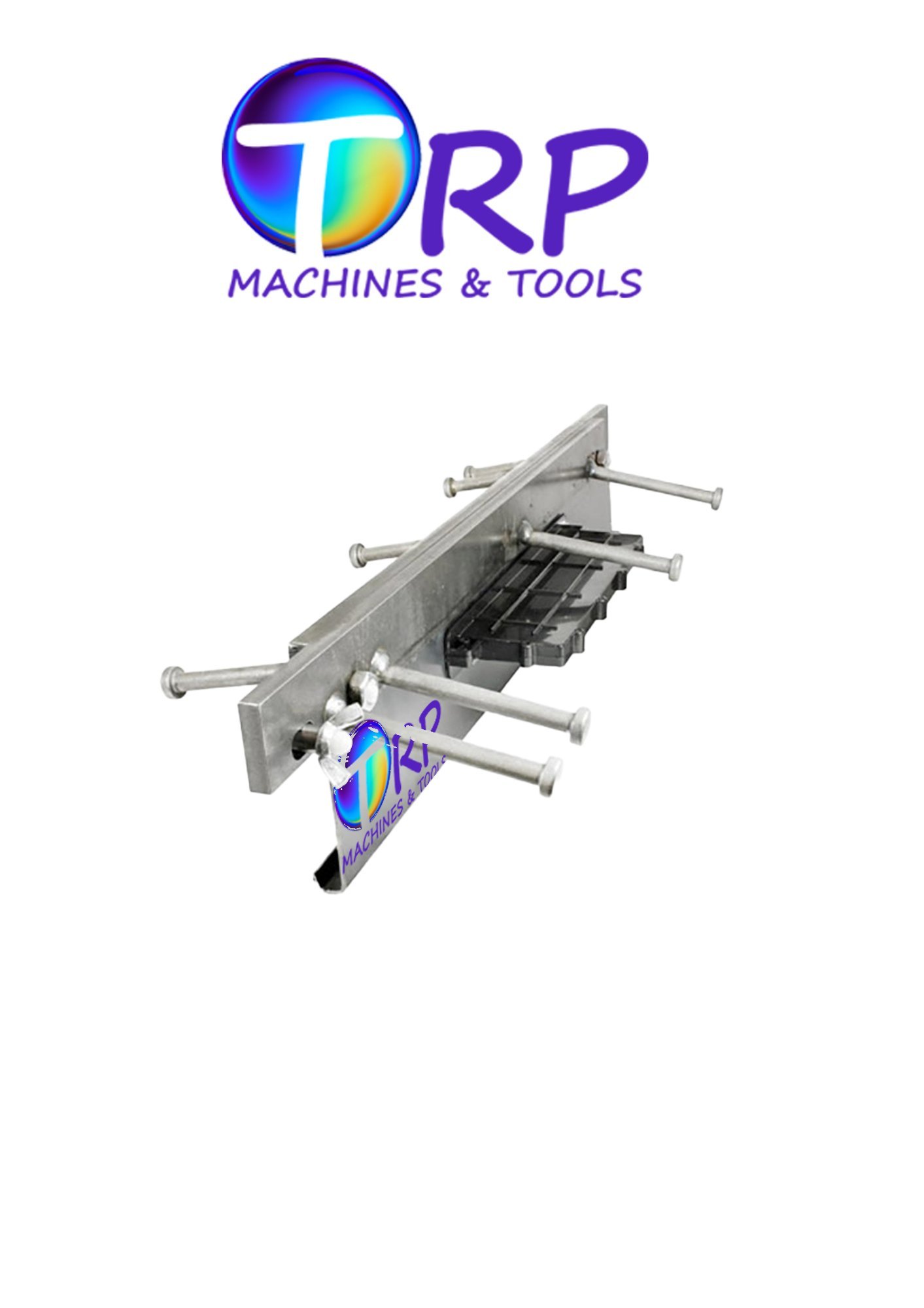
Concrete flooring is vital in industrial buildings, warehouses, factories, parking areas, commercial spaces, and infrastructure projects. These floors endure continuous loads, temperature fluctuations, movement, impact, and regular traffic. Without proper joint protection, concrete edges may chip, crack, or deteriorate over time. A GI Coated Armour Joint offers an effective solution by combining a strong joint profile with a galvanized iron coating for enhanced surface protection. This makes it ideal for demanding flooring applications requiring durability and well-formed joints.
TRP Machines & Tools provides construction accessories and concrete joint systems tailored to modern infrastructure needs, along with technical consultation and application support for construction products.
What Is a GI Coated Armour Joint?
A GI Coated Armour Joint is a heavy-duty steel floor joint system that is galvanized—coated with a protective layer of zinc—to prevent rust and oxidation. This galvanization extends the joint’s service life by protecting the steel core from moisture, chemical spills, and atmospheric corrosion, while maintaining the impact resistance and load-bearing strength typical of standard armour joints.
Installed at construction joints between adjacent concrete slabs, it absorbs impacts from wheel loads, forklifts, pallet trucks, and heavy machinery, protecting raw concrete edges from chipping and deterioration. The zinc coating provides an additional layer of protection, keeping the metal profile structurally sound for decades in demanding industrial environments.
Why Choose Galvanized Protection?
While standard steel armour joints perform well in dry, controlled settings, many industrial facilities—such as food processing units, pharmaceutical plants, cold storage warehouses, and coastal logistics parks—face higher moisture, washdown cycles, and humid air. In these conditions, uncoated joints corrode faster, reducing their structural integrity over time.
A GI Coated Armour Joint effectively addresses this by using the zinc layer as a sacrificial barrier that corrodes instead of the steel underneath. This significantly prolongs the joint’s lifespan, making it a smart investment for facility owners seeking to minimize maintenance and avoid premature joint replacement.
Key Benefits of a GI Coated Armour Joint
- Superior Corrosion Resistance: Galvanized coating protects against rust, moisture, and chemical exposure.
- Extended Service Life: Perfect for humid, coastal, or washdown-prone industrial environments.
- High Load-Bearing Capacity: Maintains the heavy-duty strength of standard steel armour joints.
- Reduced Maintenance: Requires fewer repairs and touch-ups than uncoated joints.
- Smooth Wheel Transition: Facilitates forklift, pallet truck, and AGV movement with minimal vibration.
- Better Long-Term ROI: Less frequent replacements lead to lower overall lifecycle costs.
GI Coated Armour Joint Applications
- Warehouses
- Frequent forklift and material-handling equipment use requires floor joints that withstand heavy traffic and prevent edge damage.
- Manufacturing Facilities
- Floors must support machinery and operational loads; armour joint systems offer crucial protection at concrete slab joints.
- Parking Areas
- Parking structures and heavy-duty floors endure vehicle movement and repeated wheel loads; appropriate joint profiles protect concrete edges.
- Logistics and Distribution Centres
- High traffic from forklifts, carts, and handling equipment makes durable floor joint protection essential.
- Commercial and Industrial Buildings
- Concrete joint protection systems are valuable where long-lasting, reliable floor performance is needed in industrial and commercial projects.
GI Coated Armour Joint vs. Ordinary Floor Joints
- Ordinary Floor Joints:
- Provide necessary separation or movement allowance between concrete slabs but leave edges exposed and vulnerable to mechanical impact.
- GI Coated Armour Joints:
- Feature a protective galvanized metal profile that forms a strong barrier, shielding concrete edges from traffic-related damage.
Factors to Consider When Selecting a Joint System
- Floor thickness
- Expected traffic loads
- Concrete mix and strength
- Joint width
- Loading conditions
- Environmental exposure
- Installation method
- Project specifications
Project engineers should choose the joint profile based on these site-specific requirements to ensure optimal performance and durability.
How Does a Floor Expansion Joint Work?
A Floor Expansion Joint provides controlled separation between concrete sections to accommodate movement caused by temperature changes and moisture fluctuations. Concrete naturally expands, contracts, and shrinks, and a properly designed joint manages these movements to prevent uncontrolled cracking.
When combined with suitable edge protection, such as an armour joint, the system enhances long-term durability and functionality for heavy-duty floors. The joint design must align with the project's structural and flooring requirements.
Installation Considerations
- Confirm floor dimensions, joint locations, concrete thickness, reinforcement layout, and expected traffic before installation.
- Position the joint profile accurately and securely before pouring concrete.
- During concrete pouring and finishing, maintain proper alignment and elevation of the joint profile to avoid uneven surfaces and stress.
- After installation, inspect the finished floor to ensure the joint is fully integrated and aligned with the concrete surface for optimal performance.
Choosing the Right Joint for Your Project
When selecting a floor joint system, consider factors such as expected traffic load, moisture exposure, slab thickness, and environmental conditions. For facilities where rust and long-term wear are concerns, a GI Coated Armour Joint provides superior structural protection and corrosion resistance compared to uncoated options.
Conclusion
A well-engineered GI Coated Armour Joint safeguards your concrete flooring from cracking, spalling, and corrosion while ensuring smooth and safe movement of heavy industrial traffic. As a leading armour joint manufacturer, TRP Machines & Tools combines precision engineering with dependable galvanized protection to deliver joint systems designed for India's most demanding industrial environments.
Contact TRP Machines & Tools today to discuss your flooring needs and discover the ideal GI coated joint solution for your next project.