
Armour Joint: Complete Guide
Learn everything about Armour Joints, including their purpose, working principle, types, benefits, applications, technical specifications, FAQs, and why TRP Machines & Tools provides high-quality armour joints for industrial flooring and concrete slab construction.
REV A
01Overview
Modern industrial floors are designed to withstand heavy forklift traffic, dynamic wheel loads, impact forces, and continuous operational movement. However, one of the most vulnerable areas of any concrete floor is the construction joint. Without proper edge protection, these joints can chip, crack, spall, and deteriorate over time, leading to costly repairs and operational downtime.
An Armour Joint is a heavy-duty steel joint protection system installed between adjacent concrete slabs to protect exposed slab edges from mechanical damage while allowing controlled movement caused by shrinkage, expansion, and temperature variations.
Also known as a Floor Armour Joint, Construction Joint System, Armoured Joint, Steel Armour Joint, Industrial Floor Joint, Floor Joint Protection System, Concrete Joint System, or Joint Edge Protection System, Armour Joints are widely used in warehouses, logistics centers, factories, manufacturing plants, airports, distribution centers, and industrial buildings.
TRP Machines & Tools, Mumbai, Maharashtra, India, manufactures precision-engineered Armour Joints designed to improve floor durability, extend service life, and reduce maintenance costs in heavy-duty concrete flooring applications.
02Quick Answer
An Armour Joint is a steel edge protection system installed at construction joints in concrete floors. It protects slab edges from chipping and cracking while allowing controlled horizontal movement caused by concrete shrinkage and temperature changes, ensuring long-lasting and durable industrial flooring.
03What is an Armour Joint?
An Armour Joint is a steel construction joint system used in concrete floors to protect slab edges from impact damage while maintaining proper load transfer between adjacent concrete panels.
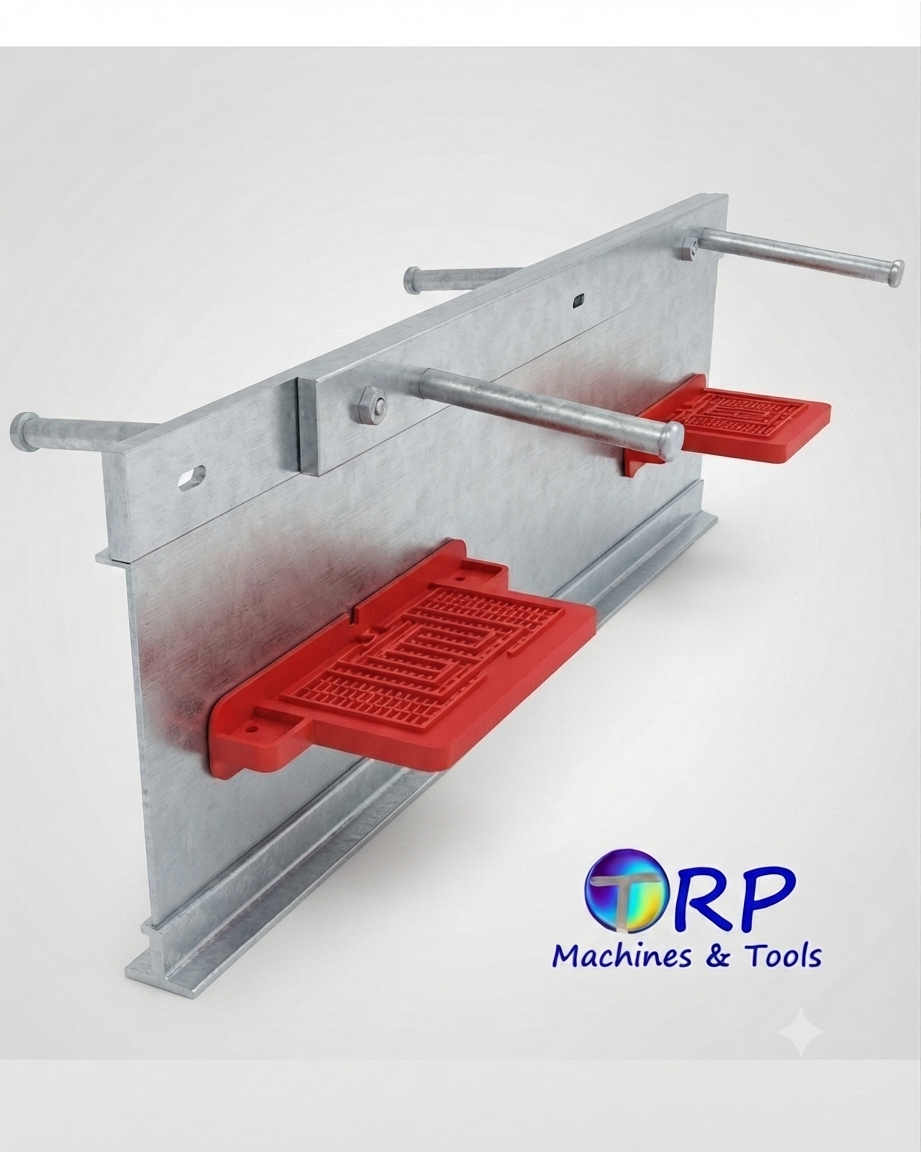
It consists of heavy-duty steel profiles positioned along the construction joint before concrete is poured. Once installed, the exposed steel edges absorb impact from forklift wheels, pallet trucks, heavy machinery, and industrial traffic instead of allowing the concrete edges to deteriorate.
Armour Joints are commonly installed in industrial floors where durability, flatness, and long-term performance are critical.
04Why are Armour Joints Required?
Concrete naturally shrinks during curing and expands or contracts due to temperature changes. These movements create stresses at construction joints.
Without proper edge protection, joints may develop:
- Edge spalling
- Concrete chipping
- Cracking
- Uneven floor surfaces
- Joint deterioration
- Costly maintenance
- Reduced floor life
- Operational disruptions
Armour Joints protect these vulnerable slab edges while allowing controlled movement, ensuring better floor performance.
05How Does an Armour Joint Work?
Armour Joints are installed between adjacent concrete pours.
- 01PositioningThe Armour Joint is accurately aligned along the planned construction joint.
- 02Concrete PlacementConcrete is poured on both sides of the steel joint profile.
- 03CuringAfter curing, the steel edges become permanently embedded within the slab.
- 04Controlled MovementAs concrete shrinks or expands, the Armour Joint accommodates movement while protecting slab edges.
- 05Load TransferHeavy wheel loads pass across the joint with reduced impact, minimizing edge damage and maintaining floor integrity.
06Why Do Concrete Floor Joints Fail?
Concrete joints are subjected to repeated traffic and environmental movement. Common causes of joint failure include:
- Heavy forklift traffic
- Impact loading
- Concrete shrinkage
- Thermal expansion and contraction
- Poor joint detailing
- Inadequate edge protection
- Overloaded floors
- Repeated wheel impact
Installing Armour Joints significantly reduces these risks and extends the life of industrial floors.
07Standard Armour Joint
Designed for warehouses, factories, and commercial industrial floors.
08Heavy-Duty Armour Joint
Suitable for high-load industrial applications with frequent forklift and truck traffic.
09Sinus Armour Joint
Features a sinusoidal profile that minimizes vibration and provides smoother movement across joints, making it ideal for automated warehouses and high-speed material handling systems.
10Custom Armour Joint
Manufactured according to project-specific slab thickness, loading requirements, and joint movement criteria.
11Why are Armour Joints Better than Conventional Construction Joints?
Traditional saw-cut or unprotected construction joints expose concrete edges directly to traffic, resulting in early deterioration.
Armour Joints provide:
- Steel edge protection
- Better load distribution
- Controlled joint movement
- Reduced spalling
- Longer floor life
- Improved ride quality
- Lower maintenance costs
12Key Features
- Heavy-duty steel construction
- Precision-engineered profiles
- Excellent edge protection
- High load-bearing capacity
- Controlled slab movement
- Corrosion-resistant finish (optional)
- Easy installation
- Long service life
- Accurate alignment
- Compatible with industrial flooring systems
- Low maintenance
- Reliable performance under continuous traffic
13Structural Benefits
- Protects slab edges
- Reduces edge spalling
- Controls cracking
- Improves load transfer
- Maintains floor flatness
14Operational Benefits
- Smooth forklift movement
- Reduced vibration
- Less equipment wear
- Improved workplace safety
- Higher operational efficiency
15Financial Benefits
- Lower repair costs
- Reduced maintenance
- Longer floor lifespan
- Less downtime
- Better return on investment
16Technical Specifications
- Product Type: Armour Joint
- Application: Industrial Concrete Floor Construction Joints
- Material: High-Strength Structural Steel
- Profile Type: Standard / Heavy-Duty / Sinus
- Installation: Cast into Concrete Slabs
- Movement Direction: Horizontal Movement Accommodation
- Load Transfer: Yes
- Surface Finish: Natural / Galvanized (Optional)
- Suitable Slab Thickness: As per Project Requirement
- Maintenance: Low
- Service Life: Long
17Armour Joint
- Steel edge protection
- High impact resistance
- Better load transfer
- Reduced spalling
- Longer service life
- Smooth wheel movement
- Lower maintenance
18Conventional Joint
- Unprotected concrete edges
- Higher risk of chipping
- Increased maintenance
- Poor edge durability
- Shorter service life
- Greater wheel impact
- Frequent repairs
19Applications
Armour Joints are widely used in:
- Industrial Floors
- Warehouses
- Distribution Centers
- Logistics Parks
- Manufacturing Plants
- Automobile Plants
- Food Processing Units
- Pharmaceutical Facilities
- Cold Storage Warehouses
- Airports
- Cargo Terminals
- Container Yards
- Parking Structures
- Commercial Buildings
- Data Centers
- Heavy Engineering Facilities
- Smart Industrial Parks
20Industries Served
- Construction Industry
- Industrial Flooring
- Warehousing & Logistics
- Manufacturing Industry
- Automotive Industry
- Food Processing
- Pharmaceutical Industry
- Infrastructure Development
- Commercial Construction
- EPC Contractors
- Industrial Developers
21Installation Guidelines
- Ensure accurate alignment before concrete placement.
- Maintain the specified slab level throughout installation.
- Secure the Armour Joint firmly before pouring concrete.
- Verify joint straightness and elevation.
- Follow project-specific installation drawings.
- Allow proper concrete curing before opening the floor to traffic.
22Maintenance Tips
- Inspect joints periodically for damage.
- Keep joints free from debris.
- Repair damaged sealants if applicable.
- Check floor level at joints.
- Avoid overloading beyond design limits.
23Buying Guide
Before purchasing an Armour Joint, consider:
- Floor loading requirements
- Slab thickness
- Expected joint movement
- Traffic type (forklifts, trucks, AGVs)
- Steel quality
- Corrosion protection
- Manufacturing accuracy
- Installation support
- Project specifications
- Supplier experience
24Why Choose TRP Machines & Tools?
TRP Machines & Tools manufactures premium-quality Armour Joints designed for demanding industrial flooring projects.
25Why Customers Choose TRP Machines & Tools
- High-strength steel construction
- Precision manufacturing
- Heavy-duty performance
- Excellent edge protection
- Long service life
- Custom sizes available
- Competitive pricing
- Pan India supply
- Technical support
- Trusted by contractors, flooring specialists, warehouse developers, and industrial builders
26Frequently Asked Questions
What is an Armour Joint?
An Armour Joint is a steel construction joint system that protects concrete slab edges while allowing controlled slab movement.
Why is an Armour Joint used?
It prevents concrete edge damage, reduces maintenance, improves load transfer, and increases the lifespan of industrial floors.
Where are Armour Joints installed?
They are installed in warehouses, factories, logistics centers, airports, industrial buildings, parking structures, and commercial concrete floors.
Can Armour Joints withstand forklift traffic?
Yes. Armour Joints are specifically designed to resist heavy forklift, pallet truck, and industrial vehicle traffic.
What is the difference between an Armour Joint and a Sinus Armour Joint?
A standard Armour Joint provides edge protection, while a Sinus Armour Joint has a wave-shaped profile that delivers smoother wheel transitions, reduced vibration, and improved performance for automated warehouses and high-speed traffic.
27Conclusion
An Armour Joint is an essential component of modern industrial flooring systems. It protects concrete slab edges, accommodates natural slab movement, improves load transfer, and significantly extends the service life of heavy-duty concrete floors.
Whether you are constructing warehouses, manufacturing plants, logistics centers, airports, industrial facilities, or commercial buildings, TRP Machines & Tools offers precision-engineered Armour Joints that deliver durability, safety, and long-term performance.
Armour Joint
- Floor Armour Joint
- Construction Joint System
- Steel Armour Joint
- Armoured Joint
- Industrial Floor Joint
- Concrete Joint System
- Joint Edge Protection System
- Floor Joint Protection
- Industrial Construction Joint
- Concrete Floor Joint
- Best Armour Joint Manufacturer in India
- Heavy Duty Armour Joint for Industrial Floors
- Armour Joint for Warehouse Flooring
- Steel Armour Joint Supplier
- Construction Joint System for Concrete Slabs
- Industrial Floor Armour Joint
- Sinus Armour Joint Manufacturer
- Floor Joint Protection System India
- Armour Joint for Logistics Warehouses
- Concrete Floor Joint Protection Solution